
DRIVING HISTORY, ONE MILE AT A TIME

Life is one Cadillac after another
1952. This was Cadillac's 50th anniversary year. There are only minor changes in styling and trim but some are specifically designed to celebrate the occasion. For example, the V decals on the hood and boot lid were done in gold. The 62 Sedan got a higher tailgate, creating extra luggage space. Reversing lights were now standard and incorporated into the taillights. At the rear, all models now feature a new Cadillac trademark, a dual exhaust system incorporated into the bumper. The decals on the trunk lid varied by series. Standards now included self-winding clocks, dual drive Hydra-Matic, improved turn signals, anti-dazzle mirror and much more. Hydra Matic for the 75 was $186, windshield washer $11, oil filter $11, power steering $198, high beam sensor $52 and power windows $139. Cadillac had the most powerful car in the US auto industry this year and sales were booming. The 1,300,000th Cadillac of all time was built.
A military order was won for T41El Walker Bulldog tanks and T41 twin 40mm gun motor vehicles for the Korean War.
Styling and horsepower sold cars in the 1950s, and no one knew that better than Cadillac. Although the styling changed from year to year, Cadillac made sure to maintain the continuity of the design, even though the car always looked "new", there could never be a mistake of being anything other than "The Standard". of the World". Cadillac also enhanced its image with some of the most stylish advertisements of the time. In the early 1950s, she produced a series of advertisements showing the car above a necklace of diamonds, emeralds or rubies, with simple, direct mini-stories below. For example, one of them told of the paperboy who had admired Cadillacs for 31 years and was now an industrialist about to buy his first: "No compromise this time!" cried the ad.
Three GM divisions celebrated their 50th anniversary in 1952 and that was celebrated with expensive limited editions, all large convertibles. Buick offered the Skylark for $5,000, which was $1,500 more expensive than a Roadmaster Convertible and Oldsmobile's 98 Fiesta, which costs $5,715. For the price difference with the Super 88 Convertible you could buy a base 88 2 on. Cadillac's anniversary model appeared in the Series 62 as the Eldorado. Only 533 were built that year, largely due to a skyrocketing price of $7,750. The 3 specials were taken off the line and partly built by hand. Even with the high selling prices, no profit was made on these models. The attractions: custom interior, special "Panoramic" windshield, sporty beltline and a metal lid instead of a canvas hood to cover the folded hood. Incidentally, 28,000 '53 Cadillacs were equipped with a Buick Dynaflow automatic after a fire at the Hydra-Matic factory in Livonia.
Eldorado, in proper Spanish, El Dorado, means "The Gilded One (the Gilded One)". Legend has it that it was a legendary golden kingdom, a place of fantastic riches that was believed to be located in the snow-capped mountains of what is now Colombia. Over the years, "Eldorado" has come to represent the best of everything: opulence, wealth, the good life. So it was a completely logical choice to use this name for a stunning new Cadillac convertible. The name was sought through an internal competition to find a name for the car marking the company's anniversary. A secretary from the merchandising department, Mary-Ann Marini, won that competition. Her winning name was adopted for the new Cadillac.
The original Eldorado can be viewed in the same light as the V16 from 23 years before. Although the Eldorado was different. Instead of staid, classical dignity, he had flair and zest and was flamboyant. But like the Sixteen, it cost the world $7,750, 87 percent more than the standard Series 62 convertible. For that kind of money, the buyer could have actually bought three cars: a Cadillac 62 convertible, a Pontiac sedan, and a Chevrolet business coupe. Also, like his ancestor of the 1930s, he was scarce. Only 532 were built in the first model year.
Many saw the Eldorado for the first time on television. The date was January 20, 1953 and Dwight D. Eisenhower, World War II's most popular hero, was wheeled down Pennsylvania Avenue to his first inauguration as President of the United States. We saw the popular new leader of the Free World riding - from above - in the back seat of this sporty, yet elegant car. By the way, think about that for a moment. 1953 is not that long ago. Yet here the President of the United States was driving in an open car. No armor plate. Not bulletproof glass. No protection and none of us thought anything of it. America had not yet lost its innocence. However, we couldn't take our eyes off that beautiful Eldorado, the most glamorous machine we'd ever seen come out of post-war Detroit.
Modeled after a 1952 'concept car', the '53 'Eldorado' was the first of GM's Harley Earl 'dream machines' to enter production, albeit on a limited scale and along with the Chevrolet Corvette from 1953. Characteristic were the new "panoramic" windshield that foreshadowed things to come. It was three inches lower than the Series 62 and had a longer, slimmer appearance, although the overall length was the same. The interior was upholstered in the finest leather and the chrome wire wheels gave an extra touch of elegance. Standard equipment included a radio, heater, tires with white sidewalls, power steering and a Hydra-Matic. Aircondition could be ordered for $620. If there was any doubt that Cadillac was supreme in the prestige class, the Eldorado took that doubt away. The futuristic Le Mans show car of 1953 had a major influence on the design of the Eldorado of 1954.
Coupes with jambs didn't make a comeback in '54, but the Eldorado did. Just a year later, Cadillac thought they had made a point with the Eldorado, but they also knew that 532 cars couldn't make money. It was time for a new kind of Eldorado, one that could be sold in large numbers and thus yield a significant profit. So the 1954 model was of a different breed and thus sold for a different price: $5,738, more than $2,000 less. Although the '54 Eldorado was easily recognizable with ribbed bare metal on the lower rear fenders and gold Cadillac logos, it was much less distinctive than the original. Still, the price was right, even though it was "only" $1,300 more expensive than the 62's. Despite a somewhat short model year, the Eldorado found 2,150 buyers. This rose to 3,950 units in '55 and twice as many for '56, when the Eldorado series was expanded with a hardtop coupe, the Seville. It was priced the same at $6,556 as the now renamed Biarritz convertible.
The 1954 Cadillac received many exterior changes. This included a lower, slimmer body and, for the first time, an integrated bumper/grill that incorporated two huge chrome bullets that soon became known as "Dagmars", in honor of well-endowed NBC TV star of the time Virginia Ruth. egnor. Round dual exhausts were incorporated into the vertical bumper ends and the rear bumper was completely redesigned. A panoramic windscreen was standard on all models. Sedans had a separate molding above the windshield, creating a built-in sunvisor effect. Coupes had a curved rear window that became known as a "Florentine" style window. A wide air intake under the windshield was now featured on all models.
The Series 62 chassis had a brand new longer wheelbase that also put them about 140 pounds heavier. A feature of this model was the lack of louvres on the rear wing. The hood and tailgate featured V decals and logos and there were full-length scuff plates in shiny metal. The Coupe DeVille's had scripts on the rear pillars of the hardtop. The Eldorado (which is still considered a Series 62) had gold decals and had ribbed panels behind the rear wheels to emphasize this part. Made of extruded aluminum, these panels also sat on a unique Eldorado coupe built for the president of Reynolds Aluminum Co. Also included with the production convertible were the wire wheels and custom interior trims and the Cadillac logo embossed on the seat backs. Automatic windshield washers, power steering, 12-volt electrical system and aluminum pistons made it to the long list of standard equipment for the first time this year. The Series 62 four-door sedan was now seven inches shorter than the other models. Another one-off creation was an exclusive Sedan DeVille. Power brakes are $48, radio $120, air conditioning $620, chrome wire wheels $325. Assembly of the 1954 models began on January 4, 1954 after a 25-day shutdown for the transition to the new production line. Fiberglass-built Cadillac show cars such as the Park Avenue four-door sedan, El Camino coupe and La Espada convertible appeared at the GM Motorama show.
Power continued to be provided by the division's landmark 331 CUI overhead valve V8 which first appeared in 1949. Although power increased from 210 to 230, there were no further changes. In fact, the numbers for '53 were intentionally understated to facilitate this business acumen. The Eldorado still had the stock Cadillac engine and impressive list of standard features of its predecessor, but it now used the exact same bodywork as the Series 62 Cabrio, with no bodywork changes as on the '53.
The 1955 Eldorado was more striking than the '54. Rocketship tail fins above the round taillights adorn the rear fender, making the Eldorado instantly recognizable. Fender skirts were eliminated and the wheel recesses were enlarged, the better to show off the flashy new "Sabre-spoke" wheels. They were intended to be introduced in the 1958 model year, but these exclusive wheels had become available exclusively for the Eldorado. An addition to the dashboard of each of these fine cars was a small brass plaque engraved with the owner's name. It was felt that Cadillac had taken it too easy in '54. The Eldorado could too easily be seen as a luxury 62 convertible. That wouldn't happen now! The other models kept the small fin taillight design that had become a Cadillac signature. The division's basic '54 look was maintained for 1955 and '56 through effective evolutionary facelifts. In 1956 Cadillac introduced the first four-door hardtop Sedan de Ville, which immediately scored almost as many sales as the Coupe de Ville and standard 62 combined.
While there have been no major changes to the appearance of Cadillacs this year, a number of refinements were apparent.
The grill was redesigned with wider spaces between the strips and the parking lights were placed directly below the headlights.
On the sides of the body, the bumpers formed a right angle with the vertical edge of the rear doors or fenders of the series 62 and 60S models. This accentuated the line of the sheet metal. The Florentine curved rear window was now also used for the sedans. Three chrome moldings bordered either side of the rear number plate. The Coupe DeVille had a gold nameplate on the C-pillar. Tubeless tires were available for the first time. The power of the Cadillac engine seemed to increase with sales. For 1955, the power reached 250 hp thanks to a higher compression (9.0: 1) and an improved manifold. The use of dual four-speed carburetors gave the Eldorado an extra dose of vitamin, bringing its advertised horsepower to 270, a number matched only by the 275-hp Packard Caribbean. According to Motor Life Magazine, this gave the Eldorado a theoretical top speed of 117 miles per hour. Remarkably, Cadillac kept the price of this beautiful car low. At $5,814, it was only $76 more expensive than the much less distinctive (and less powerful) 1954 version. Of course production went ahead again, to 3,950 units this time. That figure would be the highest ever for the open Eldorado. Motor Trend magazine reported fuel economy figures of 12.9 miles per gallon (stop-and-go) for a Series 62 sedan with the standard 250 horsepower V-8.
Total 1955 output for all models reached 140,777 units, a new record for Cadillac.
The 1955 Eldorado is a certified Milestone Car.
The Park Avenue sedan, a futuristic show car that became the predecessor to the Eldorado Brougham, appeared at the New York Motorama on January 19, 1955.
It was built in less than 74 days! Another show car seen this year was the Celebrity hardtop coupe.
The early 1950s were a time of great prosperity

The new OHV V8 from 1949

The No. 2 and 3 were equipped with the new 331 V8 OHV.
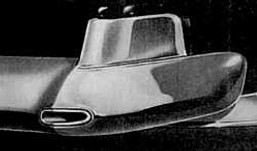
Iedere Cadillac had vanaf nu 2 uitlaten in de bumper.

Voor het eerst was hydraulische stuurbekrachtiging leverbaar. In de bestuurdersstoel zit Rita Brown van de PR-afdeling van Cadillac. Zij ontdekte dat "parkeren en manoeuvreren uit een garage met het grootste gemak gaat".

De Walker Bulldog tank met Harry Truman.

In 1952 was dit de eerste Eldorado


_JPG.jpg)
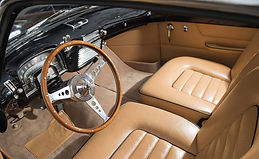_JPG.jpg)

.jpg)
.jpg)

1955 Eldorado met een eigen ontwerp voor de achterzijde. 1953 was een uniek ontwerp, 54 was niet uniek genoeg en 55 was de gulden middenweg.


Cadillac Townsman, een luxe versie met vinyl dak, een Golden Anniversary model op basis van de Series 60 Special Fleetwood.

Eén van de 4 1953 LeMans dreamcars. Kijk voor alle info bij het GM Motorama deel bij Geschiedenis.

De 1953 Orleans (# 1619). De eerste 4 deurs hardtop, voorloper van de 1956 Sedan de Ville


The first designs for the 1948 model


Cadillac Design Studio at Hershey's home

1954 Park Avenue dreamcar

1955 Eldorado Brougham Dreamcar (Order #2253)


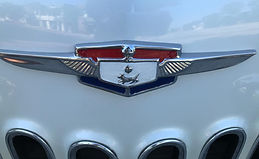
Foto 1 toont de La Salle II sedan zoals deze bij Warhoops is weggehaald door Joe Bortz, foto 2 toont de sedan in 2024 samen met de roadster in het Petersen museum. Foto 3 toont de productie van de roadster en op foto 4 zie je de afbeelding van de hond van Earl.

Voorstel voor de 1956 Sedan de Ville. Je ziet hier de florentine curve, deze vloeit vanaf het dak naar de zijkant, gelijk met de achterdeur. De foto is van Cadillac's fotograaf Neil Madler en is van 7 maart 1955.


Custom 1956 Cadillac met de koplampen van een 1958 model.


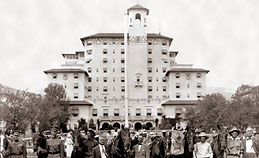
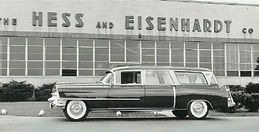


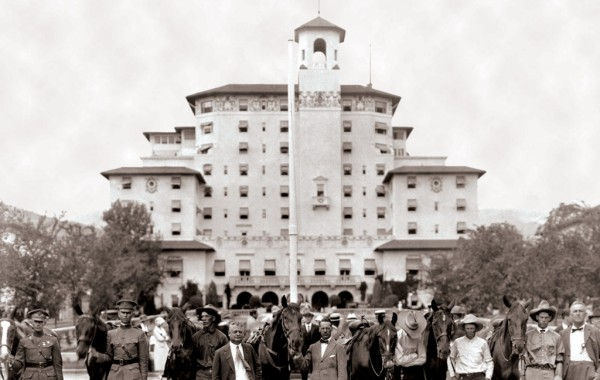


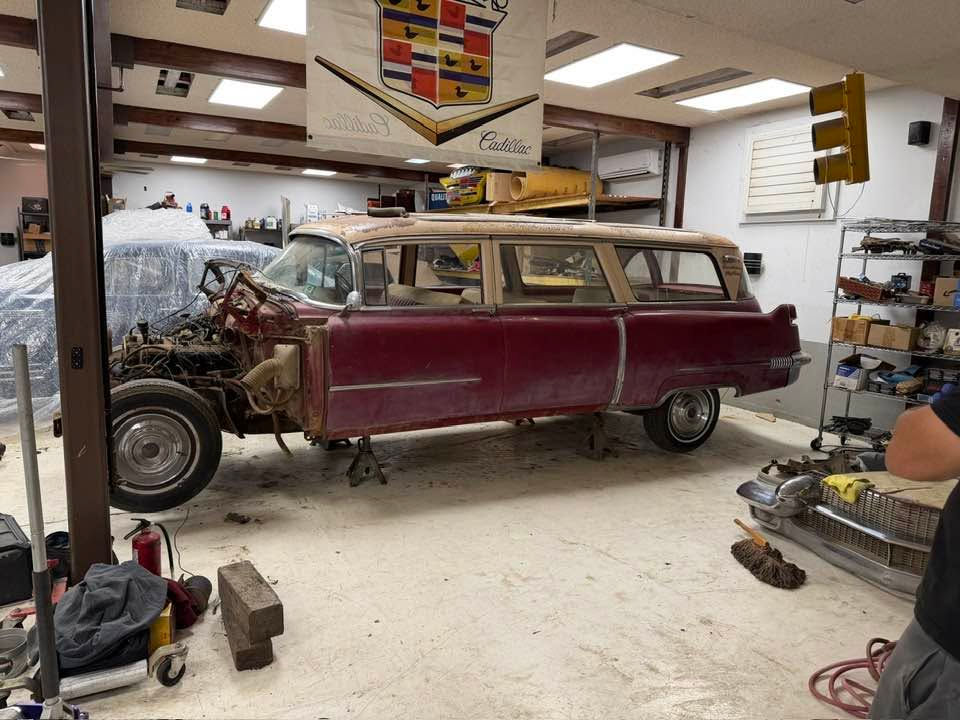


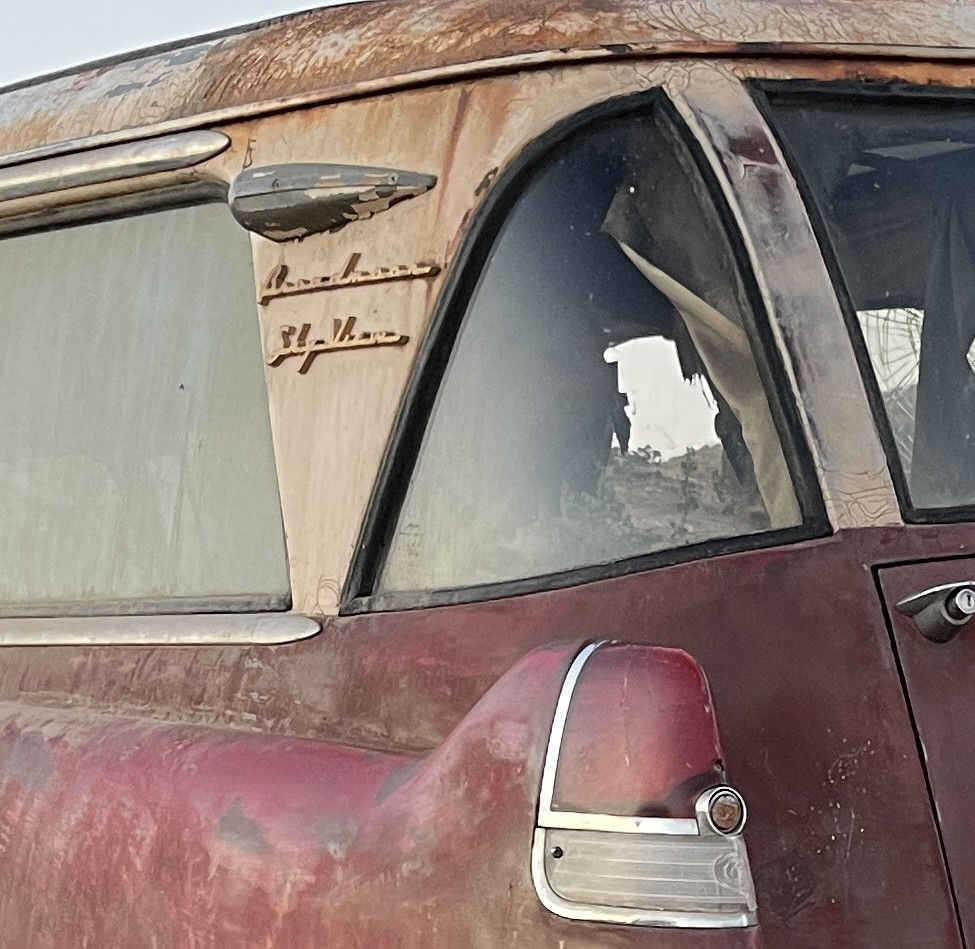
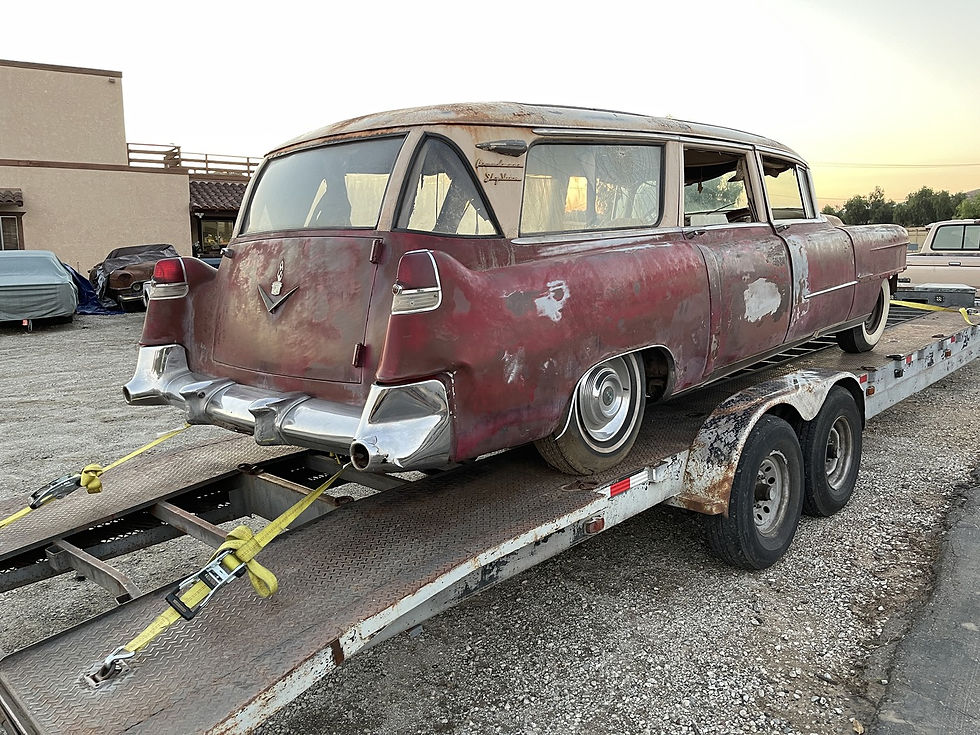


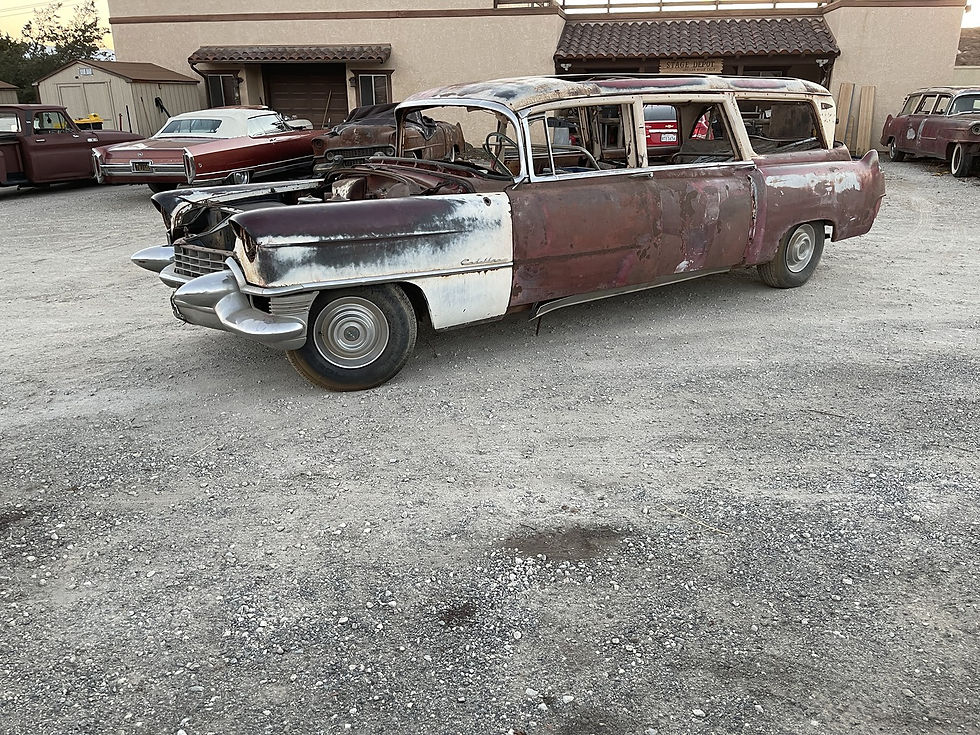


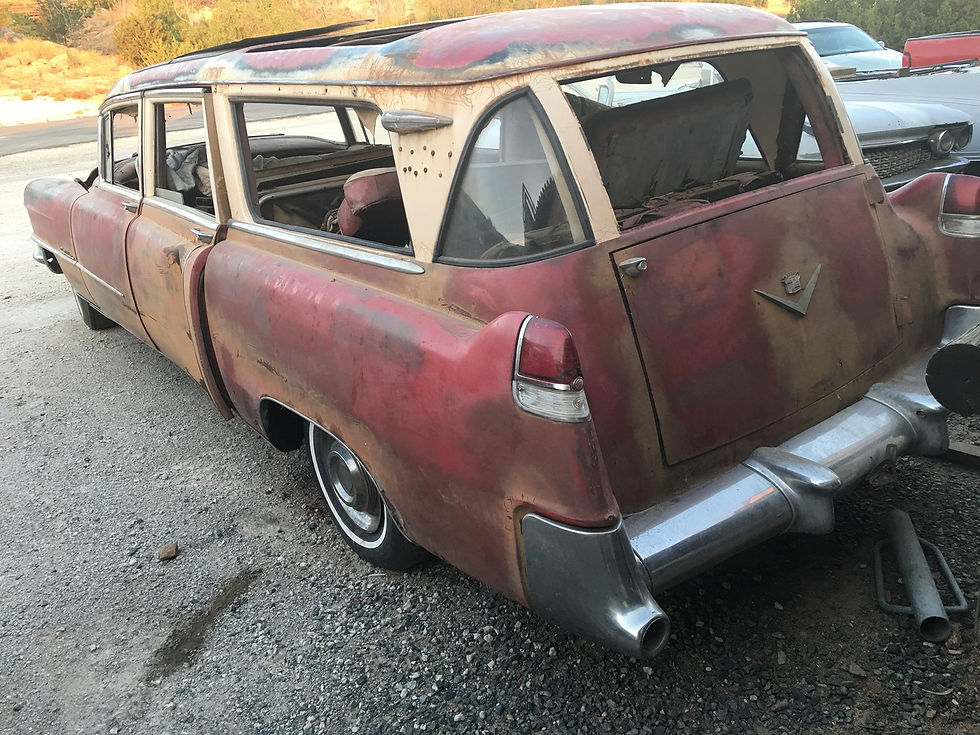
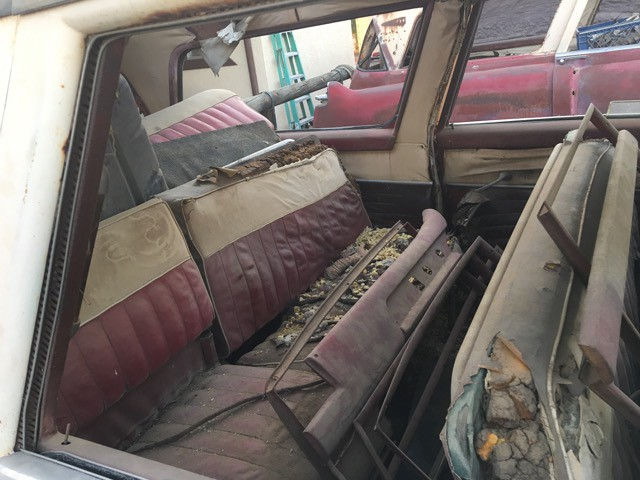
Wayne Turner (eigenaar van meerdere wagons) vertelt:
Onder het artikel op Bring a Trailer staat een reactie uit 2014 van deze verzamelaar. Aangezien zijn originele bericht nogal warrig en rommelig was geschreven, is hieronder een heldere samenvatting van zijn verhaal:
Ik wil graag wat informatie delen, aangezien mijn vrouw en ik Mr. Hess (de man zelf) persoonlijk hebben gekend. We hebben ooit een gezamenlijk evenement georganiseerd voor de Cad/LaSalle (Buckeye-regio) en de AACA (Zuid-Ohio-regio). Mr. Hess nam toen zijn diaprojector mee en heeft ruim 100 van ons een paar uur lang fantastisch vermaakt. Hij vertelde over de JFK-auto (Lincoln), de Secret Service-limousines uit '56, de Packard Darrins uit '41 (de allerbeste), de Executive Lincoln-conversies, en vele andere projecten.
Maar goed, om terug te komen op het onderwerp: het Broadmoor-project.
De officiële titel is de Broadmoor Skyview (met plexiglas panelen in het dak voor die prachtige sightseeing-trips op Pike's Peak). Deze auto's hebben een zeer lage overbrengingsverhouding (versnelling) om een grote wagen met 12 welgestelde burgers de Pike's Peak op te krijgen.
-
Er zijn er 6 gebouwd in 1955 en 2 in 1956.
-
Ze waren allemaal rood met beige daken, rode geplooide lieren bekleding en beige vinyl afwerking aan de bovenkant.
-
Het zijn 12-persoons wagens met 4 zitrijen. Alle stoelen kijken naar voren, waarbij de eerste 1/3e van de zitting opklapbaar is om toegang te bieden tot de achterste banken.
-
De voorstoel is verstelbaar (maar niet elektrisch) en de ramen werken met een zwengel (ook niet elektrisch).
De stationwagons met een normale wielbasis heten officieel de Custom Viewmaster (dit staat in sierletters op elk achterscherm geschreven). Dit was een passieproject van Mr. Hess, die dol was op stationwagons. Hij smeekte de Cadillac-divisie om ze te bouwen en dacht dat ze er wel 75 tot 100 per jaar van konden verkopen. Het was een soort testprogramma, omdat stationwagons rond die tijd (1952) erg populair waren.
In 1952 diende Mr. Hess 8 ontwerpen in voor wagons op basis van de 62-serie. Hij was afgestudeerd aan het GM Institute en onderhield goede banden met de heren in Detroit. Maar zij bepaalden de prijs en het ontwerp volledig. Het personeel van Cadillac gaf de voorkeur aan een strakke carrosserie zonder 'Woody'-afwerking (geen Country Squire-invloeden), maar Mr. Hess hield juist van dat minder formele, meer ontspannen en gezinsvriendelijke karakter — de associatie met vakanties, honden, kinderen en picknicks die een stationwagon zo sympathiek maakt.
-
1955: 7 Viewmasters geproduceerd.
-
1956: 12 Viewmasters geproduceerd.
Het glas bij het achterste zijscherm dat Mr. Hess in zijn ontwerpen van 1952 verwerkte, was er al láng voordat de Nomad, Safari of andere wagons dat hadden. Mogelijk is Mr. Hess wel de grondlegger van dat effectieve ontwerpkenmerk dat tot in de jaren '70 werd gebruikt.
Voor de modellen uit 1955 ontving Hess & Eisenhardt (H/E) een rijdend chassis met de voorkant, de voorruit en 15 cm (6 inch) dak vanaf de voorruit gemeten. De rest van het dak fabriceerden ze zelf. Het glas voor de achterste zijschermen werd speciaal gegoten — het was dus géén Nomad-, Buick- of Pontiac-glas (de bovenste ruit van de achterklep was wél van een Nomad). De voordeuren kwamen van de Fleetwood 60 Special. De achterdeuren werden alleen aan de bovenkant aangepast om ze haaks te maken op de langere daklijn.
Ik heb echt een hekel aan stationwagons die dezelfde achterdeur en ruit gebruiken als een sedan en dan het achterste zijglas vreemd laten aansluiten. Dat ziet er goedkoop uit, alsof de wagen is gebouwd uit restjes van een sedan.
De daklijn van Hess heeft een prachtige, meervoudige bolling (compound curvature) die naar achteren toe afloopt. Het is echt een geweldige auto om het land mee te doorkruisen, wat wij in 1992 deden toen we met onze groene Custom Viewmaster naar de Grand National in Phoenix reden. Hij weegt bijna 2.200 kg (4800 lbs), maar daardoor ligt hij véél beter op de weg dan een Chevrolet uit die tijd. En met de enkele 4-barrel 331 cu in Cadillac-motor haal je nog steeds bijna 1 op 8,5 (20 mpg). Veel Viewmasters werden besteld met de Eldorado dubbele 4-barrel optie en watergekoelde transmissie, maar persoonlijk geef ik de voorkeur aan de enkele 4-barrel opstelling.
Oh, de achterschermen en de middelste Fleetwood-opvulstukken werden geleverd in dozen. Het was dus veel meer werk dan een simpele ombouw van een sedan.
-
In 1960 werd er zo'n conversie besteld door Central Cadillac (Frank Porter, de manager van Central, was zelf een wagon-liefhebber).
-
Vervolgens bestelde Rickenbaugh Cadillac een rode '56 voor Dhr. Johnson uit Denver. Een jonge Rick Rickenbaugh wikkelde die deal af — ik heb hem nog gesproken een paar jaar voor zijn vliegongeluk (vreselijk aardige man).
Bij de 1956-modellen werden ze besteld met de middenstijl al gemonteerd en de daklijn doorgetrokken tot voorbij die B-stijl. Ik bezit zelf één model uit '56 en kan je vertellen dat hun (H/E) aanpak toen slimmer was en veel tijd en ergernis bespaarde. Ze maakten de interieurlijsten uit één stuk met veel loodwerk, terwijl die van '56 uit 4 verstek zagen stukken rond de achterste schermen bestaan. Hetzelfde geldt voor het binnenwerk van de achterdeuren.
Mr. Hess klaagde er wel over dat de Viewmasters niet winstgevend waren. Tot slot zorgde de agressieve winstmarge van de dealers ervoor dat de prijs ruim boven de $10.000 uitkwam. Dat heeft de verkoop waarschijnlijk erg geholpen, want voor minder geld kon je én een Ford Country Squire én een Fleetwood met airco kopen!
Oh, mijn e-mail is: kennedithturner@hotmail.com als je wilt kletsen, want ik houd 35 jaar later nog steeds van deze hobby.
Wayne's Eigen Collectie
De gerestaureerde Broadmoor op de foto hierboven is toevallig onze auto! De foto is duidelijk een paar jaar geleden genomen bij Ault Park (de autoshow in Cincinnati, Ohio).
Die dag moesten we deze Broadmoor én 3 van de slechts 7 gebouwde Custom Viewmaster-wagons (die gebouwd zijn op het chassis van de Serie 62 sedan met de deuren van een 60 Special en vele andere maatwerk-onderdelen) klaarmaken en er naartoe rijden:
-
Mijn vrouw reed in de Joe Louis-wagon (witte woody met rood interieur).
-
Mijn zoon reed in de zwarte woody (met zijn originele groen/witte lederen interieur).
-
Onze goede vriend, wyle Bernie DeWinter van de Professional Car Society, reed in de groene wagon met strakke carrosserie, genaamd Porter. (Ja, vernoemd naar Porter Wagoner! We hebben hem ontmoet in Auburn en hem persoonlijk verteld dat we onze auto naar hem hadden vernoemd... ja, we zijn zonder twijfel vreemde vogels!).
Ik bezit 6 van de slechts 7 gebouwde 1955 Custom Viewmaster stationwagons. Elke auto is heel anders, terwijl de Broadmoors (alle 6) identiek waren. Dat gezegd hebbende, zou ik die Broadmoors zo weer kopen en restaureren, maar ik heb mijn handen vol aan de Viewmasters, Muntz Jets en andere auto's.
Als kenner van Cadillac — met name de modellen uit de jaren '40 en '50 — kan ik je vertellen dat de vormgeving van Willard Hess (van Hess-Eisenhardt) van absolute topklasse is. Het zijn geen vierkante dozen op wielen, maar auto's met prachtige glooiende lijnen (compound curves); heerlijk om naar te kijken.
Er is momenteel nog slechts 1 Custom Viewmaster (uit 1955) onbekend, aangezien ik de overige 6 bezit. Weet iemand wat er is gebeurd met de koperkleurige auto die oorspronkelijk werd geleverd aan Central Cadillac in Cleveland, Ohio?
Ik ben er trots op dat ik de witte wagon van Harry Karl / Joe Louis bezit, evenals die van Dhr. Gamble (van Procter & Gamble, besteld via Thompson Bros. in Cincinnati, Ohio).
Ik zou hier uren over door kunnen gaan, maar ik hoor graag jullie reacties!
Mijn telefoonnummer is: 937-212-3691 (Dayton, Ohio). Bedankt!
Aangezien zijn nummer openbaar staat op de site heb ik hem hier ook laten staan. Of het nummer na al die tijd nog actief is weet ik niet.